
Flexible Polyurethane Foam Applications
Packaging
Draft
April 20, 2022
Flexible polyurethane foam (FPF) is used in packaging applications for several reasons. FPF is cost effective. It has the ability to absorb repeated impacts and still protect items inside the packaging. It can be customized by shape, impact absorption ability, color, and more. It sees particular use in protecting expensive equipment, such as electronics, cameras, and medical devices.


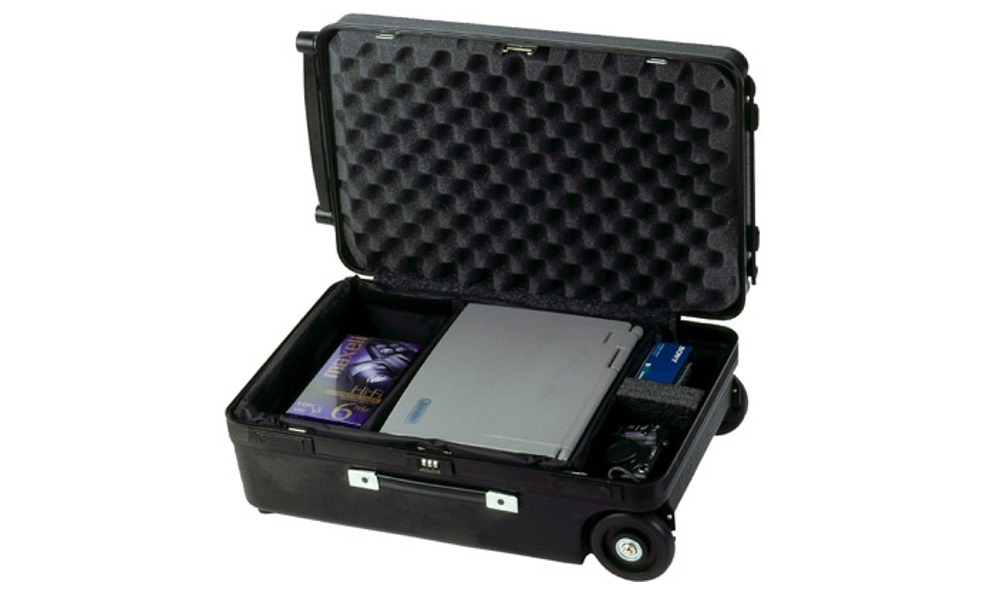
Top: Flexible polyurethane foam used to protect expensive electronics. Left: Closeup photo of convoluted foam. The dimples reduce weight and allow the foam cushioning to better conform to the item being protected.

The capability to control the physical performance characteristics of flexible polyurethane foam makes it a preferred cushioning material for protective packaging.
Flexible polyurethane foam in packaging acts as a shock absorber, protecting a moving (falling) packaged object from damage as it meets resistance, slows and finally comes to rest. Whether you need to protect a moderately heavy piece of equipment, or a delicate electronic component, the physical performance of polyurethane foam can be fine-tuned to meet most packaging needs.
Benefits of FPF In Packaging Applications
Support
Flexible polyurethane foam is capable of gently cushioning delicate items while still providing the support necessary to hold them in the proper position for maximum protection.

Impact Absorption
FPF is an excellent material for absorbing impact from falls or from other items coming into contact with an item. Foam can be engineered to have specific properties that provide protection custom-tailored to the packaging application.
Quietness
FPF is quiet, and absorbs sound as it does impact.

Value
Foam is cost effective, and because it can be engineered to provide specific protection properties, it is often the impact and force absportion material that provides the best packaging value.

Versatility
Foam can be easily fabricated and molded into custom shapes, with cutouts shaped specifically to the itmes it needs to protect.

Durability
Flexible polyurethane foam in packages can last for years, maintaining its ability to provide protection.

Light Weight
Because foam can be engineered to have effective force absorption properties at low densities, it can protect items without adding unnecessary weight to a travel case or other container.

Hygienic Properties
Foam does not support the growth of bacteria or mold, so it can protect items without concern over these issues.

Recyclability
Flexible polyurethane foam be recycled once it has been used in applications such as packaging, furniture, bedding, and carpet cushion. In fact FPF has one of the most successful recycling stories in the U.S., with virtually all post industrial foam scrap and much post consumer scrap recycled into carpet cushion and other uses.
How flexible foam can help decelerate a falling object and provide impact dissipation is best demonstrated with the familiar egg toss game, in which two people repeatedly toss an egg back and forth. With each toss, the distance the egg travels is increased, so the egg catcher's hands and arms must also travel farther to decelerate the flying egg without breaking the shell. And so it is with flexible foam packaging - with fragile objects: the distance provided for deceleration must increase with the maximum drop height. With more rugged objects, less distance is required and less responsive foams may be used.
Packaging foam is specified for its ability to absorb shock. This is determined through testing known as dynamic cushioning testing, or more commonly called, cushion drop testing.
Dynamic cushioning tests consist of dropping platens of a specific size repeatedly from a specific height onto a foam sample. The maximum shock (expressed in Gs) sustained as the falling platen impacts the foam sample is measured and recorded.
A cushioning product's packaging characteristics are fully identified with additional testing using different sample thicknesses and drop heights.
Two additional pieces of information are key to engineering a proper packaging solution: the fragility of the product to be protected and the maximum drop height.
The fragility of an item is measured and reported numerically as its G factor Fragility Index (expressed in Gs). The fragility index is the maximum G force that an item to be packaged can withstand without sustaining damage. G Force is the force of gravity or acceleration on a body, about 32.19 feet/second2 (9.8 m/s²).
This is determined by dropping test objects from increasing heights and recording the G force sustained by the item when damage first occurs. (This is similar to, but not to be confused with, the dynamic cushion drop test.)
In addition to the fragility index, the maximum drop height must also be determined for an item to be packaged. Maximum drop height is simply how far the packaged item is expected to be dropped during typical handling and shipping procedures. Once the maximum drop height and fragility index are determined, dynamic cushioning curves can be developed to design a protective package.
A packaging engineer takes the separate elements of maximum drop height, object size, object fragility index and dynamic cushioning curves to design a package and create packaging material specifications. The goal is to minimize cost and volume/bulkiness while maximizing protection.
The use of viscoelastic foam technology (also known as “memory foam”), has more than doubled load limit for flexible polyurethane foam. Viscoelastic foam is most useful for protection of heavy, delicate objects. Composite packaging (combining flexible polyurethane foam with other packaging material) is also a preferred approach. (Note: viscoelastic foams can be sensitive to temperature changes, so these must be taken into account. In order to be effective, viscoelastic foams must be used just around their glass transition temperature. If used at lower than the glass transition, the material will be stiff, and above it will become bouncy.)
Foam responsiveness can be affected by openness (airflow), firmness (IFD or CFD), density and combinations of these properties.
Other Challenges & Solutions
Challenges
 When it comes to packaging materials, recycling is a bigger and bigger concern. So the plastics, foam, and packaging industries are all researching new ways and expanding existing ones for recycling material.
There are commercial uses for recycled foam. In fact, one of the most successful recycling stories in North America is carpet cushion. Approximately 85-90% of the carpet cushion market is represented by bonded (or rebond) cushion products, made from FPF recycled from post industrial and post consumer processes, such as mattress, furniture, and packaging recycling. Bonded carpet cushion diverts more than 1 BILLION pounds of scrap FPF from landfills annually. Learn more
Related Resources
Related

Flexible Polyurethane Foam: A Primer
How FPF is made, specified and used in different applications.

Technical: Foam Density
An explanation of foam density and how it is specified for different uses.

Technical: Foam Firmness
How foam firmness is specified.

Technical: Foam In Packaging
A deeper dive into how foam is used in packaging.